

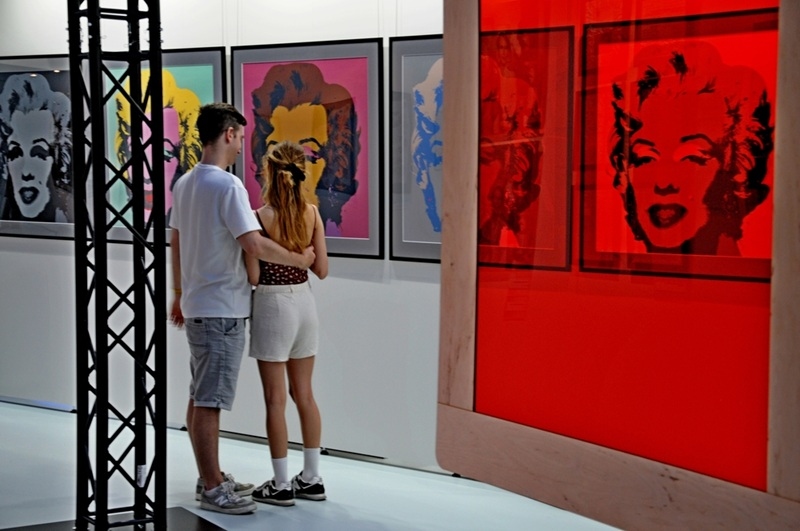
For a long time, art felt like something you had to “get.” People stood in galleries, stared at paintings, and tried to figure out what they were supposed to feel. Then pop art came along and made things a lot less complicated.
Instead of asking deep questions right away, it showed people something they already knew. A product. A celebrity. A comic-style image. Nothing unfamiliar, nothing intimidating. That shift is where famous pop artists come in. They did not try to make art more complex. If anything, they did the opposite. They made it easier to connect with, and that changed everything.
The interesting thing about famous pop artists is that their work does not feel distant, even today. There is no barrier. No need to study it first.
People see it and instantly recognize something. That moment of recognition matters more than any explanation. It is quick, almost automatic. That is also why their work still shows up in conversations around modern art icons. Not because it is old and respected, but because it still works.
Pop art did not start as a grand idea. It came from observation.
Artists noticed how much of life was filled with repeated images. Advertisements, packaging, magazines. The same visuals kept showing up everywhere.
Instead of ignoring that, they leaned into it.
These elements shaped what we now associate with pop art artists, even though each one approached it differently.
There are quite a few names connected to pop art, but some stand out simply because their work keeps resurfacing.
Warhol took repetition and made it feel intentional. Seeing the same image again and again stopped being boring and started feeling like a statement about how media works.
He pulled visuals straight out of comic books and treated them seriously. That alone shifted how people viewed printed imagery.
Oldenburg did something simple but effective. He made everyday objects bigger than expected. That alone forced people to look again.
His work felt like fragments of advertisements placed together in a way that made sense visually, even if it felt slightly chaotic.
He kept things clean and bold. His work did not rely on complexity to stand out.
Hamilton explored consumer culture early on, long before it became a common theme in art discussions.
His collages reflected a world filled with media and machines, capturing how quickly things were changing.
Haring made art visible in public spaces. You did not have to visit a gallery to see it.
Basquiat’s work felt raw and personal. It carried energy that did not feel polished, and that made it stand out.
Murakami connects older pop art ideas with modern visuals, showing how the style continues to evolve.
These artists are often grouped as key pop art movement artists, even though their approaches were quite different.
You May Also Like: How Pop Art Digital Defines the Modern Age of Creativity
There is not much distance between the artwork and the viewer. It shows something recognizable and lets people decide what to think about it.
That approach is a big reason it still holds a place in art history pop art discussions.
Pop art did not stay the same. It shifted as the world around it changed.
Technology played a big role in that.
These changes helped shape what we now call contemporary pop artists, who carry the same ideas forward in a different context.
Even if someone is not actively looking at art, pop art is still around.
It shows up in places people do not always think about.
That presence is why discussions about modern art icons often include pop artists, even decades later.
Before pop art, art often felt separate from everyday life. Pop art blurred that line.
It showed that something ordinary could become meaningful if presented differently. That idea changed how people approached creativity. It also made art feel more accessible. People did not have to look far to find it. It was already around them.
That shift still influences how people view the work of pop art artists today.
Read More: Modern Pop Art Techniques Artists Should Start Using Now
Pop art did not try to follow the rules. It quietly rewrote them. The artists behind it paid attention to things others overlooked and gave them a new kind of visibility. That alone changed how people interact with visuals.
The impact of famous pop artists is still visible, even if it is not always obvious. Sometimes it is in a design. Sometimes in a pattern. Sometimes in something as simple as an image that feels familiar but looks slightly different. And that is enough to make people stop and notice.
Pop art became popular quickly because it did not require special knowledge to understand. People could immediately recognize the images and connect with them. It reflected everyday life, which made it feel relevant and accessible. That familiarity helped it spread faster compared to other art styles that felt more distant or complex.
Not every pop art piece is meant to carry a deep or hidden meaning. Some works focus purely on visual appeal and recognition, while others include commentary on media, culture, or consumer behavior. The flexibility of the style allows artists to express both simple ideas and complex thoughts without strict limitations.
Pop art continues to influence modern artists in many ways, especially through design, digital media, and branding. Elements like bold colors, repetition, and familiar imagery are widely used even today. With social media and technology, these ideas have become more visible, showing how the movement still shapes creative expression.
This content was created by AI