

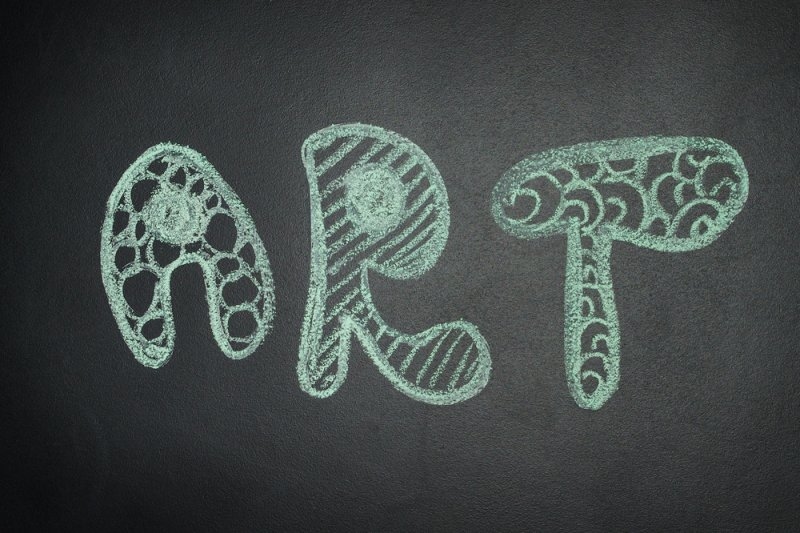
While it’s common to associate the term art with things like paintings, photographs, or sculptures, our written language is actually one of the most potent art forms out there. Text-based art places emphasis on the word and uses writing as a visual and cognitive piece of art that people must read, reflect on, and interpret instead of merely looking at, which has also made its mark on contemporary arts and social dialogues.
Text-based art is an artwork or visual art creation that primarily focuses on letters or words as the element that is being conveyed; rather than these elements acting as merely a caption or explanation for the imagery that is displayed. The words are the artwork in the purest sense, and they can be put onto any kind of support material, whether that is canvas, on a wall, through a digital display screen, or a poster.
Unlike many typical works of fine arts where visual imagery is what communicates a feeling or an idea directly, here you are meant to be communicating or connecting with the text on two levels – through both the visual structure that you are looking at, as well as its meaning through the words you are reading.
This text may be as direct, as comedic, or as poetic as the artist wants, and as with many artworks, there may well be multiple ways for the individual viewing or consuming the work of text art to be affected and connect with the idea.
One of the most significant movements associated with and directly responsible for the popularity of text-based art is Conceptual art, where artists prioritized idea and concept above all else. During the twentieth century in particular, artistic movements began to move away from the physicality of art, and many artists began questioning whether a physical output was needed or whether art, such as the concept behind it alone, was enough.
This led them to use text-based art, where words themselves could very simply articulate a message, and with such broad interpretation for its meaning. One simple sentence, scribbled on a wall, for instance, can have more to say than a detailed work of art.
Learn Further: Evolution of Line Work: From Fine Art to Pop Art Boldness
In contemporary art, text-based art holds a very important position because in a world and an age where advertising, television, and digital devices flood us with writing and words, a work of art that features writing naturally speaks to us more on a conceptual and cultural level. This art form allows us to take the words that are such an intrinsic part of our everyday life and explore how they affect our world – from personal identity to social and cultural discourse and everything that lies in between.
Contemporary works of text art also help to blur the lines between artistic forms, too, with text sometimes used for performance or blended with sound, video, or sculpture.
Of course the juxtaposition of word and visual has always had a place throughout art history - from the inscriptions that you may find on ancient monuments or the beautiful calligraphy that you may find on illuminated manuscripts – however, during modern history particularly the focus began to shift away from the visual as the predominantly form of artistic expression to text being used for its own intrinsic value, a movement which has been heavily influenced by conceptualism and that continues to shape contemporary art forms.
This type of artwork has been displayed and has come about in several ways through many different means, including: –
Letterforms themselves often take center stage with individual artists or even organizations focusing on a particular choice of typeface, or on creative arrangement and distribution of individual characters that is fundamental to conveying meaning.
Words can form huge statements, often on a massive scale across entire building faces, street spaces, and in galleries, allowing text to transform entire environments.
Words can also take center stage when placed within public spheres, encouraging greater audienceship and prompting social and cultural conversations.
Today, we see a new dimension to text art with digital technology, allowing the words to be animated or to move.
Arguably, one of the biggest advantages that text-based works have is that they are easily accessible – the vast majority of people can read and communicate, so there is immediately a starting point to a shared human understanding that helps remove some barriers associated with viewing art that is less direct and more abstract.
They also engage us by encouraging a greater understanding from us as consumers; requiring participation, whether that is intellectual or simply reading between the lines as we interpret the message conveyed. Also, that in art creativity needn’t be solely image-based; that words themselves have the power to bring to life our imaginations and create works of art that challenge, that intrigue, and that engage our imaginations as viewers.
Viewing and appreciating a work of text art does not simply require reading the words for their meaning; to properly appreciate such an artwork, one has to also observe how the words are presented visually. Pay careful attention to elements like scale, color, font choice, layout, materials, and context. These various elements will bring more nuance and texture to the interpretation and appreciation of a given piece.
To appreciate a text-based artwork, understanding the cultural circumstances, the historical periods, and any personal motivations or inspirations an artist may have, allows one to develop a more personal and connected appreciation. Ultimately, experimentation and exploration with many interpretations are a critical part of experiencing art, particularly in a broader sense and specifically text-based artworks; one must never doubt their ability or be fearful to express their interpretation.
Read Next: Bold Blocks & Vivid Hues: Power of Color Blocking in Pop Art
Text-based artwork has played a central role in the expression of ideas, artistic sentiments, and creative vision, directly supported by the plethora of artistic movements that have brought our visually fluent world into existence; it is for these reasons that this particular means of communicating artistic intents remains prevalent in many of the artworks we encounter.
Yes, definitely! In fact, many text-based artworks comprise only words. Text is used to convey a narrative that becomes part of an artistic installation. Art made with the alphabet also lends themselves to this style of expression.
Indeed, text-based artwork is very welcoming for those looking to get involved in the world of art for the very first time. Language isn't particularly intimidating for anyone, and text art is, as expected, a medium through which anyone can have a go.
People might discover text-based artwork in the following: Museums, Galleries, and the environment around them. Community projects on digital platforms. This medium is particularly ideal for public works where people interact with it first-hand.
Artists might decide on the alphabet because language has the potential to express itself concisely, while leaving space to interpret. Artists can even use letters to raise questions, challenge preconceptions, or inspire action.
This content was created by AI